
Providing a safe space for LGBTQ+ Muslims to celebrate Ramadan.
Thursday, March 12, 2026 • 6-9 pm
⚲ The Center: 208 W 13 Street, New York, NY, 10011
LGBTQ+ Community Iftar
Providing a safe space for queer LGBTQ+ Muslims and allies to break fast during Ramadan.
The LGBTQ+ Community Iftar is an annual celebration hosted at The Lesbian, Gay, Bisexual & Transgender Community Center in New York City. The gathering is rooted in creating a safe, affirming space for LGBTQ+ Muslims and allies to observe Ramadan in solidarity and community.
Since 2017, the Caribbean Equality Project, a co-founding organization led by Mohamed Q. Amin, has proudly co-organized this historic, community-centered dinner in partnership with groups serving New York City’s LGBTQ+ Muslim community.
Now celebrating its 10th anniversary, this year’s theme — “A Decade of Ummah” — honors ten years of faith, fellowship, and radical belonging. The Iftar continues its mission to uplift and celebrate the intersections of identity, spirituality, and cultural expression within the broader LGBTQ+ Muslim communities.
Each year’s program features a shared iftar meal (marking the end of the daily fast), gender-inclusive prayer, storytelling, cultural performances, educational segments, and opportunities for connection and resource sharing.
What is Iftar?
Iftar, the daily breaking of the fast during Ramadan, is a sacred moment grounded in generosity, gratitude, and collective care. For the past ten years, this celebration has fostered a welcoming and affirming space for LGBTQ+ Muslims, families, friends, and allies to gather in gender-inclusive prayer, share a meal, and honor the beauty of chosen and spiritual community through food, storytelling, education, and vibrant, culturally rooted performances.
As we commemorate A Decade of Ummah—the global community united by faith, culture, and shared purpose—we reflect on the resilience, love, and collective care that have sustained this tradition. Together, we look ahead with hope and intention, inviting all to join us in an evening of connection, remembrance, and joy.
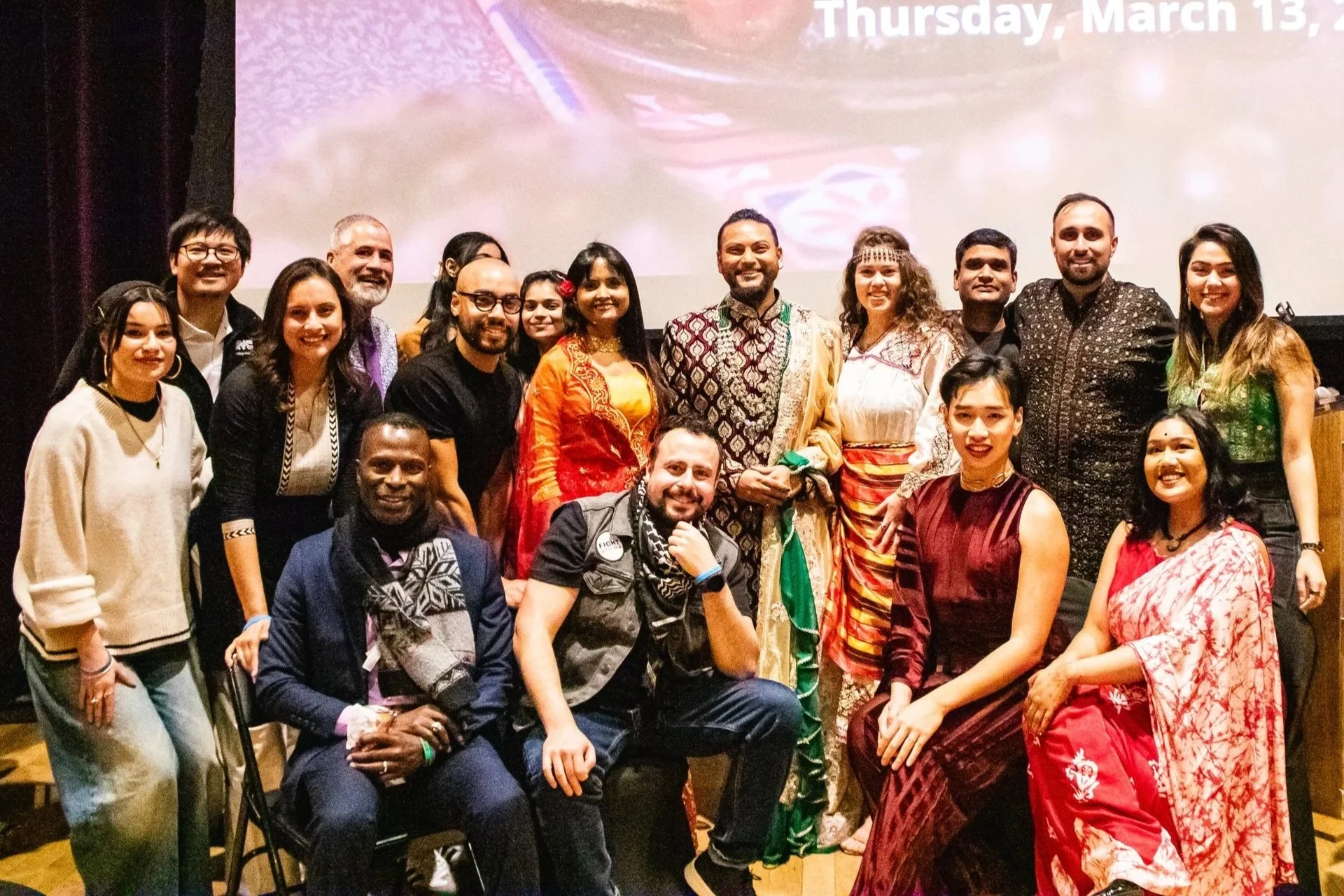
2025 LGBTQ+ Community Iftar
2024 LGBTQ+ Community Iftar2026 Prayer Companion & Resource List
Iftar Prayer Companion
A queer-affirming Ramadan guide with safety resources, inclusive reflections, du’as for justice, and practical prayer supports.
Iftar Resource List
A resource guide to hotlines, mental health care, safety, and spiritual support for LGBTQ+ Muslims in NYC.


History
A Decade of Ummah: The Story of the LGBTQ+ Community Iftar
In 2017, amid waves of hostility toward Muslim and LGBTQ+ communities, the NYC Commission on Human Rights approached Tarab NYC, Caribbean Equality Project, Muslim Alliance for Sexual and Gender Diversity (MASGD), and SALGA NYC to co-host an LGBTQ+ Iftar at The Lesbian, Gay, Bisexual & Transgender Community Center. The event emerged as both an act of resistance and renewal—responding to the Trump administration’s Muslim travel ban and the lingering grief and stigma following the Pulse nightclub shooting.
“Queer Muslims were being attacked from all sides,” recalls Mohamed Q. Amin, Founder and Executive Director of the Caribbean Equality Project.
For queer Muslims navigating layers of exclusion—from their own communities, from broader society, and sometimes from organized religion itself—the Iftar became a sacred experiment in belonging. It was a chance to assemble a space where faith and queerness could coexist unapologetically.
Building Trust and Safety
Those early days were cautious and tense. Organizers knew that visibility carried risk.
“In the first Iftar, we didn’t even have photographers,” remembers Daryl, representing the Commission on Human Rights. “We went over scenarios with The Center—what to do if there were threats, and when to involve the local precinct. It was a delicate dance.”
Safety planning became part of the ritual—proof that this community refused to be erased, even as they took protective care.
A Public Apology and the Path to Accountability
The first Iftar also carried the weight of repair. Years earlier, The Center had been criticized for its handling of a controversy involving Palestinian solidarity organizing. The 2017 event became a space for accountability and transformation.
“Glenda apologized specifically about how she handled the Palestine controversy in 2011,” said Hilal. “For me, the apology is a living amends. Hosting the Queer Muslim Iftar is the apology. Acknowledgment means nothing without action.”
Bashar, of Tarab NYC, added:
“That public apology mattered. It named harm openly and built the foundation for future collaboration. Leadership can change, but accountability shouldn’t disappear.”
In that first year, the air was heavy with tension, then release. The Adhan rang out at the end of the opening remarks, and relief swept over the room.
“There was real pain—and there was joy,” Bashar remembered. “After the fast was broken, there was laughter, dancing. Something heavy shifted.”
Creating a Home for All Identities
Over the years, the LGBTQ+ Community Iftar grew into a sanctuary—not just a meal, but a moment of wholeness.
“It’s the one place where I am all of my identities under one roof,” said Ali. “At other Iftars, I can only share parts of myself. Here, I’m fully me.”
“You can’t find this anywhere else,” Mohamed reflected. “It’s a space where Muslim cultures intersect through art, music, and shared liberation.”
No matter how large it grows, the essence remains unchanged: sitting together, breaking bread, and witnessing one another.
“Even if it doubled or tripled in size,” Bashar said, “the magic is still people sitting at tables together.”
For Hilal, the moment represented transformation on a personal level too:
“It gave me the opportunity to be recognized for my organizing efforts. For a kid from the streets, that meant a lot—to do something so meaningful, in a space that once excluded us.”
The Meaning of Ummah
Ummah, the Arabic term for the global Muslim community, has anchored this space for a decade. Its meaning continues to expand.
“Ummah means building a community grounded in care and power,” said Mohamed.
“Ummah is unity and showing up consistently,” added Hilal.
And as Ali put it simply: “This Ummah is a gathering of people who may not be able to share this part of themselves outside these four walls.”
Looking Toward the Future
A decade later, the Iftar is both a celebration and a vision statement. What began as an act of survival has become an annual testament to resilience, joy, and radical belonging.
“I hope people feel welcomed and emboldened to live their truth,” said Daryl.
“I hope the entire Center fills with tables, music, and that no one is turned away,” added Mohamed.
“And I hope it always remains a place where chosen family can be found,” Ali concluded.
Ten years on, the LGBTQ+ Community Iftar stands as a living expression of repair, courage, and love—an ever-growing Ummah that continues to feed both body and spirit.
Partner Organizations:


